
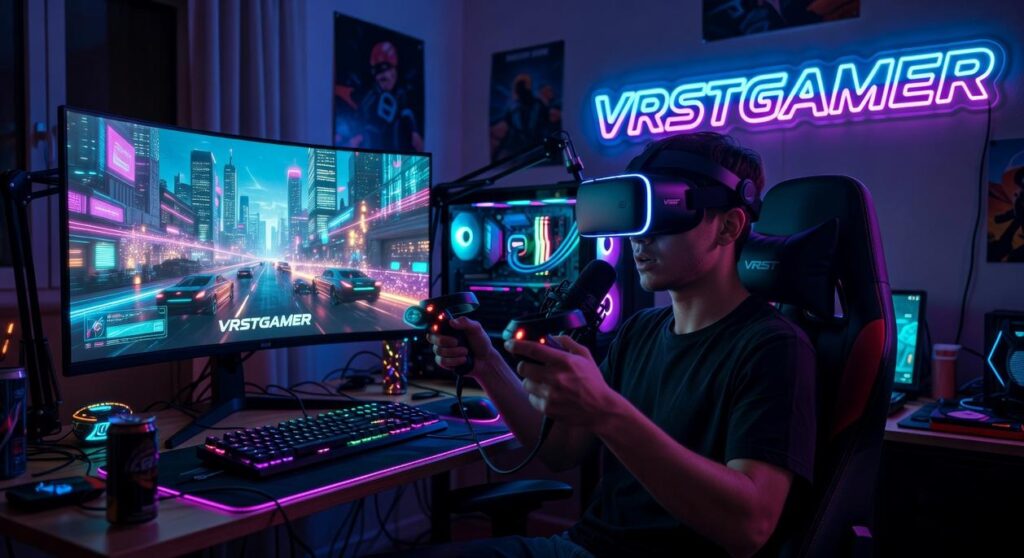
I’ve spent hundreds of hours inside VR headsets and I can tell you this: there’s a big gap between trying VR once and actually living in it.
You’re probably wondering if you’re ready to go deeper. Maybe you’ve tried a friend’s headset or played a demo at a store. Now you want to know what it really takes to become someone who doesn’t just play VR but gets it.
Here’s the thing: most people stop at tech demos. They try Beat Saber, think it’s cool, and never go further.
I’ve tested dozens of headsets and played through hundreds of VR titles. I know what separates someone who owns a headset from someone who’s actually part of the VR world.
This guide will show you exactly what it means to be a VR enthusiast. Not just the gear you need (though we’ll cover that). The mindset, the communities, the experiences that change how you think about gaming.
vrstgamer exists because VR gaming deserves more than surface-level coverage. We dig into what actually works and what’s worth your time.
You’ll learn the real steps to go from curious to committed. Which headsets matter, which games will hook you, and how to find the people who are building this space right now.
No fluff about the future of gaming. Just what you need to know today to become more than just a player.
What Defines a VR Gaming Enthusiast?
You know what separates a VR gaming enthusiast from someone who just owns a headset?
It’s not the hardware.
I’ve met people with top-tier setups who barely touch them. And I’ve seen folks with older Quest 2s who live and breathe VR.
The difference is mindset.
Some gamers treat VR like a novelty. They boot up Beat Saber at parties and call it a day. Nothing wrong with that. But enthusiasts? We’re different.
We’re the ones who don’t mind looking ridiculous flailing around in our living rooms. We actually want to feel like we’re somewhere else.
Here’s where it gets interesting though.
Not all enthusiasts are the same. Compare the hardware tinkerer to the community builder. The tinkerer obsesses over frame rates and spends hours tweaking settings for that perfect visual fidelity. Meanwhile, the community builder couldn’t care less about specs. They’re organizing VR meetups and building worlds in VRChat.
Then you’ve got the explorer type. These folks hunt down weird indie experiences on vrstgamer that most people never hear about. They’d rather play a janky experimental game with fresh ideas than another polished AAA title.
What ties us together?
We have a high tolerance for things that don’t quite work yet. We’ll beta test buggy software because we want to see where this tech is going. We join Discord servers and subreddits to talk about games most people have never played.
And yeah, we probably spend too much time thinking about the future of gaming.
But that’s the point.
The Essential Gear: From Starter Kits to Pro Setups
Choosing Your First Headset
Ever walked into a store and stared at VR headsets wondering which one won’t leave you broke and disappointed?
You’re not alone.
The first question everyone asks me is simple. Should I go standalone or PCVR?
Here’s the real difference. Standalone means you unbox it and play. No computer needed. PCVR means you’re tethered to a gaming PC, but you get way better graphics and performance.
For most people starting out, the Quest 3 is the move. It works on its own and connects to a PC if you want that later. You’re not locked into one path.
If you already have a solid gaming rig? A PCVR headset like the Valve Index gives you that extra visual punch. But be honest with yourself about whether you’ll actually use it.
What specs actually matter?
Refresh rate is how smooth everything looks when you move your head. Anything below 90Hz will probably make you feel weird. Resolution affects how clear text and distant objects appear. And field of view (that’s FOV) determines how much you see without that tunnel vision effect.
Don’t obsess over numbers though. A headset with decent specs that fits your face comfortably beats a spec monster that hurts after 20 minutes.
Upgrading Your Experience
The stock strap on most headsets? It’s garbage.
I’m serious. You’ll wear it once and immediately search for alternatives. A good comfort strap redistributes weight and turns a 30-minute session into a two-hour one without the headache.
Prescription lens inserts are a game changer if you wear glasses (no more smudged lenses or uncomfortable pressure). Controller grips keep your hands from cramping during intense sessions. And battery packs mean you’re not constantly checking your charge level mid-game.
These aren’t luxuries. They fix real problems that’ll annoy you every single time you play.
Ready to go deeper?
Full-body tracking lets games see your whole body, not just your head and hands. Haptic suits make you feel impacts and sensations. High-end GPUs push frame rates so high that everything feels like real life.
This is where vrstgamer territory gets expensive fast. But if you’re already spending hours in VR every week, the difference is worth considering.
Just don’t buy everything at once. Start with what solves your biggest pain point and build from there.
Beyond the Blockbusters: Finding Your Niche in VR

You’ve probably played Beat Saber.
Maybe you’ve heard everyone rave about Half-Life: Alyx (and yeah, it deserves the praise).
But here’s what nobody tells you about VR. The best experiences aren’t always the ones with the biggest marketing budgets.
Some people say you should stick to the popular titles. They argue that if a game isn’t a blockbuster, it’s probably not worth your time. The big names got big for a reason, right?
Fair point.
But I’ve found some of my most memorable VR moments in games you’ve never seen advertised. The stuff that doesn’t make it onto every “top 10” list but absolutely nails what VR can do.
Start here if you’re new:
- Half-Life: Alyx for storytelling that’ll blow your mind
- Beat Saber because rhythm games just HIT different in VR
- Superhot VR for that Matrix feeling you didn’t know you needed
Now let’s talk about where VR actually gets interesting.
Rhythm games go way beyond Beat Saber. Try Synth Riders or Pistol Whip if you want your whole body involved.
Flight and racing sims feel like you’re actually there. No screen can replicate sitting in a cockpit. DCS World and iRacing aren’t games anymore. They’re training.
Creative apps like Tilt Brush or Gravity Sketch let you make art in three dimensions. It sounds gimmicky until you try it.
Social VR platforms like VRChat are weird and wonderful. You’ll meet people from around the world while looking like an anime character or a talking toaster (don’t ask).
Here’s how I find the good stuff that vrstgamer covers.
Follow VR curators on Steam. They surface games before they explode.
Check SideQuest for experimental apps that push boundaries. Some are rough but brilliant.
Join developer Discord servers. You’ll get early access and actually talk to the people making these experiences.
The best video game trilogies of all time vrstgamer proves that great gaming comes in series. But in VR? Sometimes the one-off indie project changes everything.
Don’t sleep on the small stuff.
Joining the Community: Connecting with Fellow Enthusiasts
You can learn VR on your own.
But here’s what nobody tells you. You’ll hit walls that Google can’t solve. Weird tracking issues. Games that crash for no reason. Settings that make you feel sick when everyone else seems fine.
I’ve been there. Spent hours troubleshooting problems that someone in a Discord server fixed in two minutes.
Some people say online communities are toxic and you’re better off figuring things out yourself. They point to the trolls and the gatekeeping and tell you to stay away.
And yeah, those people exist.
But here’s what they’re missing. For every jerk, there are ten people who genuinely want to help. Who remember what it felt like to be new. Who get excited when you finally nail that beat saber level you’ve been stuck on.
The vrstgamer community isn’t just about fixing problems. It’s about finding people who GET IT.
Here’s where I actually connect with people:
- r/virtualreality for general troubleshooting and news
- Specific game Discord servers (not the official ones, the community-run ones where people actually talk)
- VRChat and Rec Room for hanging out
That last one surprised me.
I downloaded VRChat thinking it was just for gamers who take things too seriously. Turns out it’s where I met some of my closest friends. We attend virtual concerts. We hang out in weird worlds people built. We just TALK.
It’s not about the games anymore. It’s about the people.
Most articles tell you to join Reddit and call it a day. But Reddit’s where you go for answers. Social VR platforms? That’s where you go for friends.
Big difference.
Your Virtual World Awaits
You came here to figure out VR gaming.
I get it. The whole thing can feel overwhelming when you’re starting out. Which headset do you buy? What games are actually worth your time? And where do you find people who care about this stuff as much as you do?
This guide gave you answers to all of that.
You now know how to pick the right gear for your budget. You’ve got a list of games that will blow your mind. And you understand how to tap into a community that’s waiting to welcome you.
The path into deep VR gaming can seem complex and isolating. But it doesn’t have to be.
Following this roadmap means you can confidently navigate the hardware decisions. You’ll discover incredible games without wasting money on duds. And you’ll connect with a passionate global community that gets what makes VR special.
Here’s what happens next: Put on the headset. Jump into a new reality. Find your place in the future of gaming.
vrstgamer is here to guide you through every step of your VR journey. The virtual world is ready when you are.